A new open-access dataset is now available to support research, policymaking and advocacy on corporate accountability. BRAVE – Business-related Human Rights and Environmental Abuses is a comprehensive database developed within the REBALANCE project, funded by the EU’s Horizon Europe programme, and coordinated by the University of Pisa, of which Source International is proud to be a project partner.
The BRAVE database documents 4,314 alleged cases of human rights and environmental abuses involving 83 major European multinational corporations between 2000 and 2020, across 145 countries worldwide. Drawing primarily on data from the Business & Human Rights Resource Centre, each case is systematically coded by type of abuse, geographic location, victims involved, level of corporate responsibility (direct or indirect), and severity. This structure allows for comparative and longitudinal analyses of corporate impacts across sectors, regions and time.
The temporal analysis shows a sharp increase in documented abuses during the first decade of the 2000s, followed by a gradual decline after 2015. This trend may suggest some improvements in corporate responsibility practices and regulatory oversight, although abuses remain widespread. From a geographical perspective, violations occurring within Europe remain relatively limited, while the majority take place outside the EU, highlighting the extraterritorial impacts of European multinational activities, often in contexts characterised by weaker regulatory frameworks.
What emerges from the data is a deeply concerning picture. 98% of the companies analysed are linked to at least one alleged abuse over the period considered. Environmental damage and public health impacts account for a large share of documented cases, alongside labour rights violations and harms affecting local communities. Many abuses occur outside Europe, highlighting the extraterritorial impacts of European corporations and the role of global value chains in dispersing responsibility. The dataset also captures cases of extreme severity, including violations of non-derogable human rights.
The database also provides a detailed picture of the Italian context. Within the core dataset, 27 alleged human rights and environmental violations are linked to 12 companies, three of which are Italian. In these cases, workers are the primary victims (around 52%), followed by local communities (41%) and children (7%). Labour rights violations represent about 22% of cases, while deprivation of life and negative environmental impacts each account for roughly 19%. Other documented abuses include discrimination (11%), child labour and intimidation (around 7% each), health impacts (7%), corruption and restrictions of rights (around 4% each).
Looking at the broader database, four Italian companies are linked to a total of 167 alleged violations, only about 5% of which occurred in Europe. In approximately 78% of cases, corporate involvement is direct. These violations primarily affect local communities (83%), followed by workers (10%), activists and journalists (4%), children (2%) and consumers (1%). In terms of typology, negative environmental impacts dominate (35%), followed by health-related impacts (25%).
BRAVE was designed as a public, open-access resource, intended to strengthen the empirical foundations of academic research, policy development, civil society advocacy and debates on corporate responsibility. The database and its accompanying scientific publication will be freely accessible to all.
The BRAVE database will be officially presented during an online launch event on 23 January at 4:00 pm (CET) and is accessible via this link. The event will introduce the dataset, its methodology and potential uses, and is open to researchers, policymakers, journalists, civil society organisations and anyone interested in corporate roles in human rights and environmental justice.
The BRAVE dataset is part of the broader REBALANCE project, which investigates how corporate power shapes social, environmental and democratic outcomes, and how stronger accountability mechanisms can be developed to rebalance relations between businesses, societies and institutions.
To accompany this release, we are sharing a short video featuring images and footage from Source International’s field investigations, offering a visual insight into the kinds of environmental and social impacts that lie behind the data and a reminder that every data point represents real places, ecosystems and communities.
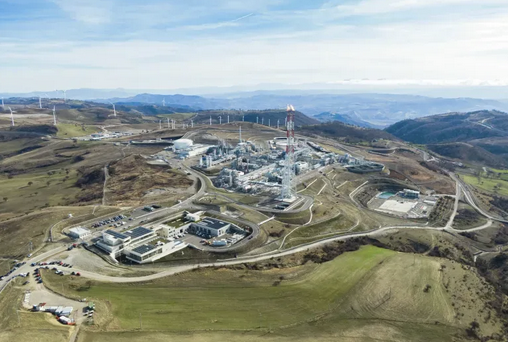
Cover photo by Stefano Sbrulli.