At the end of August, Source International travelled to The Bahamas and Guyana for the final field phase of a regional project aimed at strengthening the capacity of Caribbean countries to identify and control hazardous chemicals and waste entering through their borders.
We joined the Basel Convention Regional Centre for Training and Technology Transfer for the Caribbean (BCRC-Caribbean) and national authorities for two pilot workshops bringing months of preparatory work into practice. The activities are part of a wider initiative implemented across 12 Caribbean countries under the GEF ISLANDS Programme. The project responds to a concrete challenge: customs and regulatory authorities are often on the frontline when potentially hazardous products and waste enter a country, but identifying suspicious shipments requires appropriate procedures, coordination, information and technical tools.
Over the past months, Source International has contributed to the development of regional pre-screening and inspection guidelines designed to support authorities in identifying shipments that may contain persistent organic pollutants, mercury, lead and other hazardous substances, while strengthening implementation of international agreements including the Basel, Rotterdam, Stockholm and Minamata Conventions.
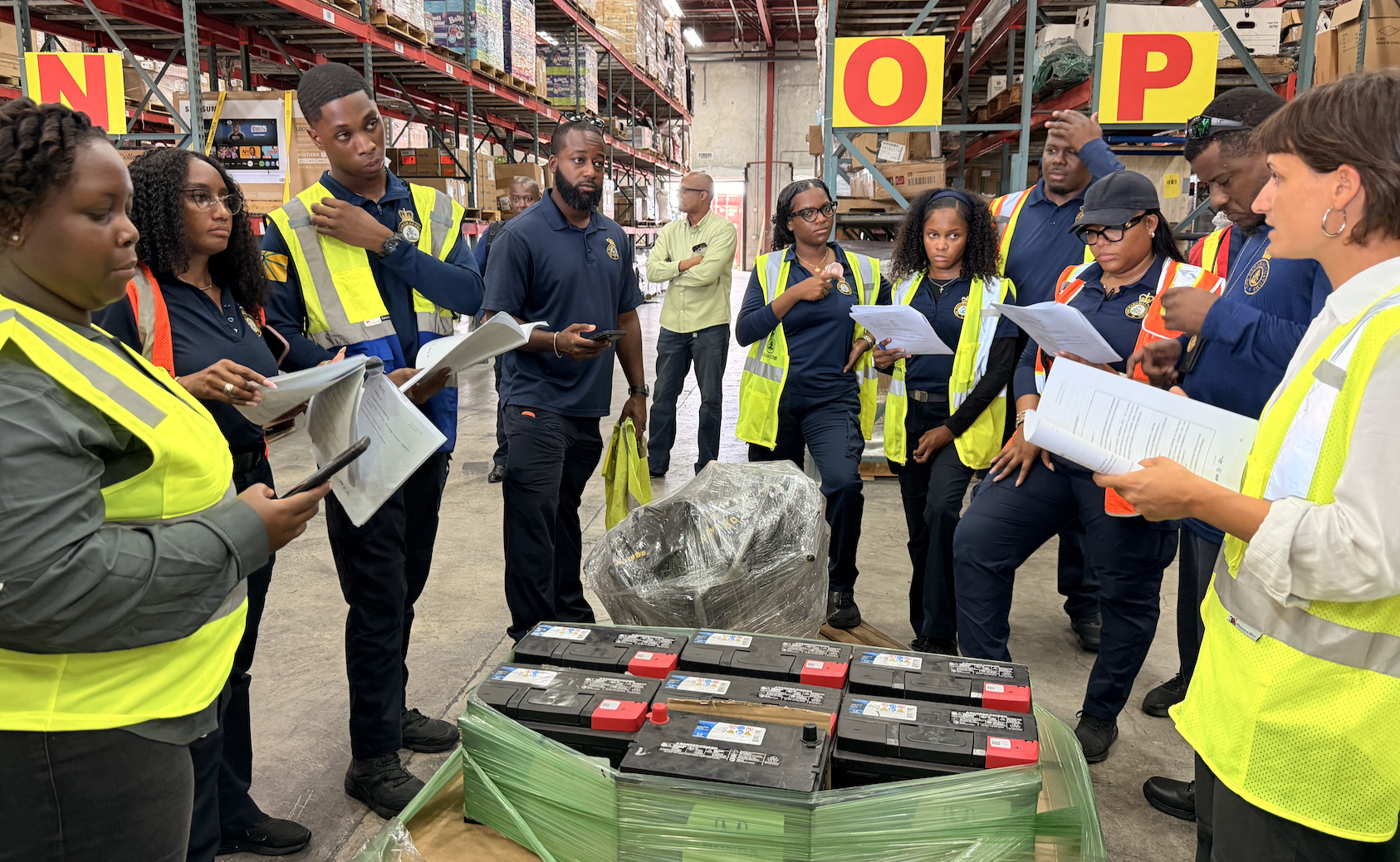
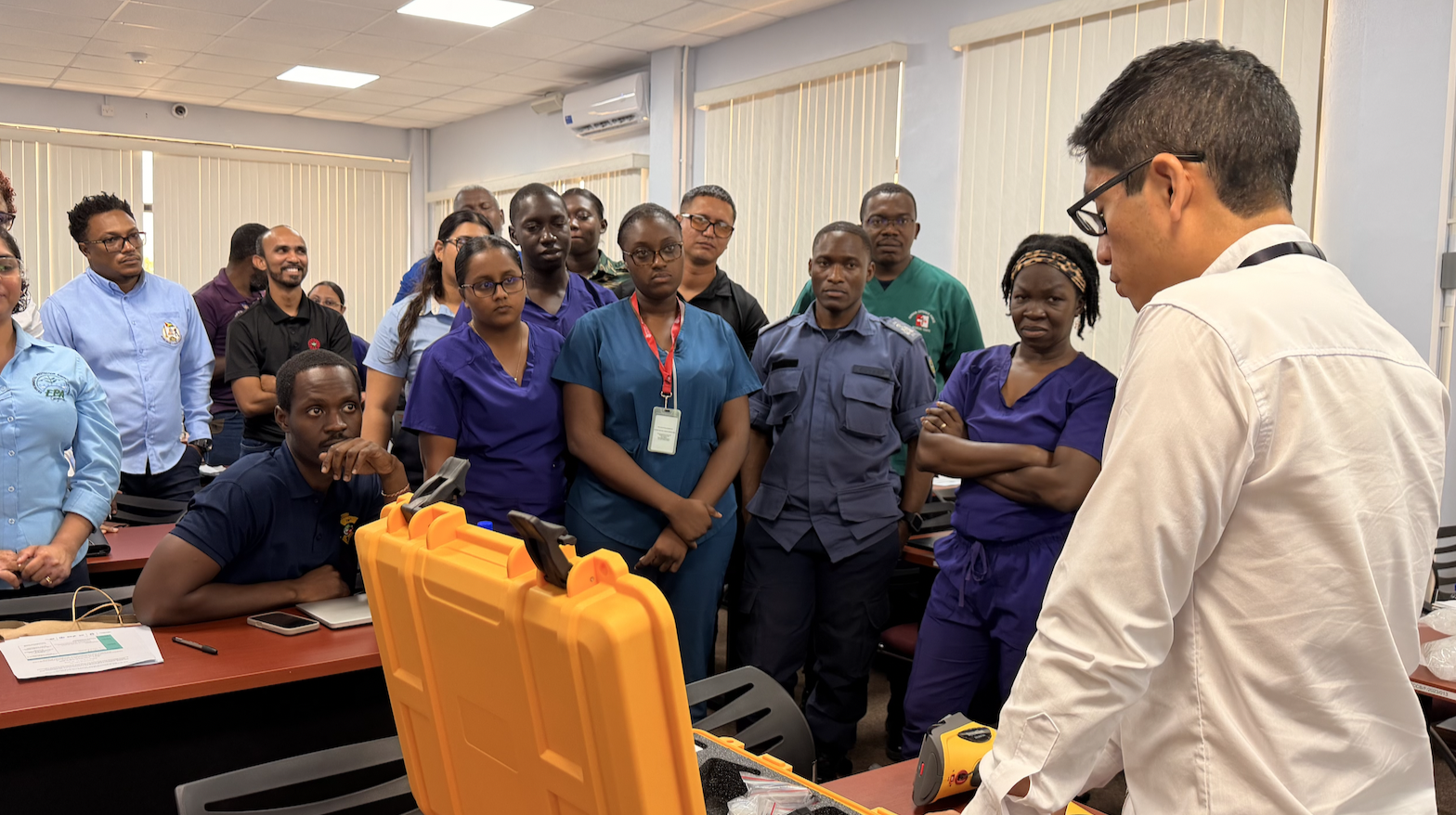
The workshops in The Bahamas and Guyana were designed to test those guidelines under real working conditions. The first part of the training focused on understanding hazardous substances, their environmental and health impacts, international regulations and the different warning signs that officers can identify before opening or inspecting a shipment. Participants worked on shipping documents, labels, product information and risk indicators to determine which consignments may require further investigation.
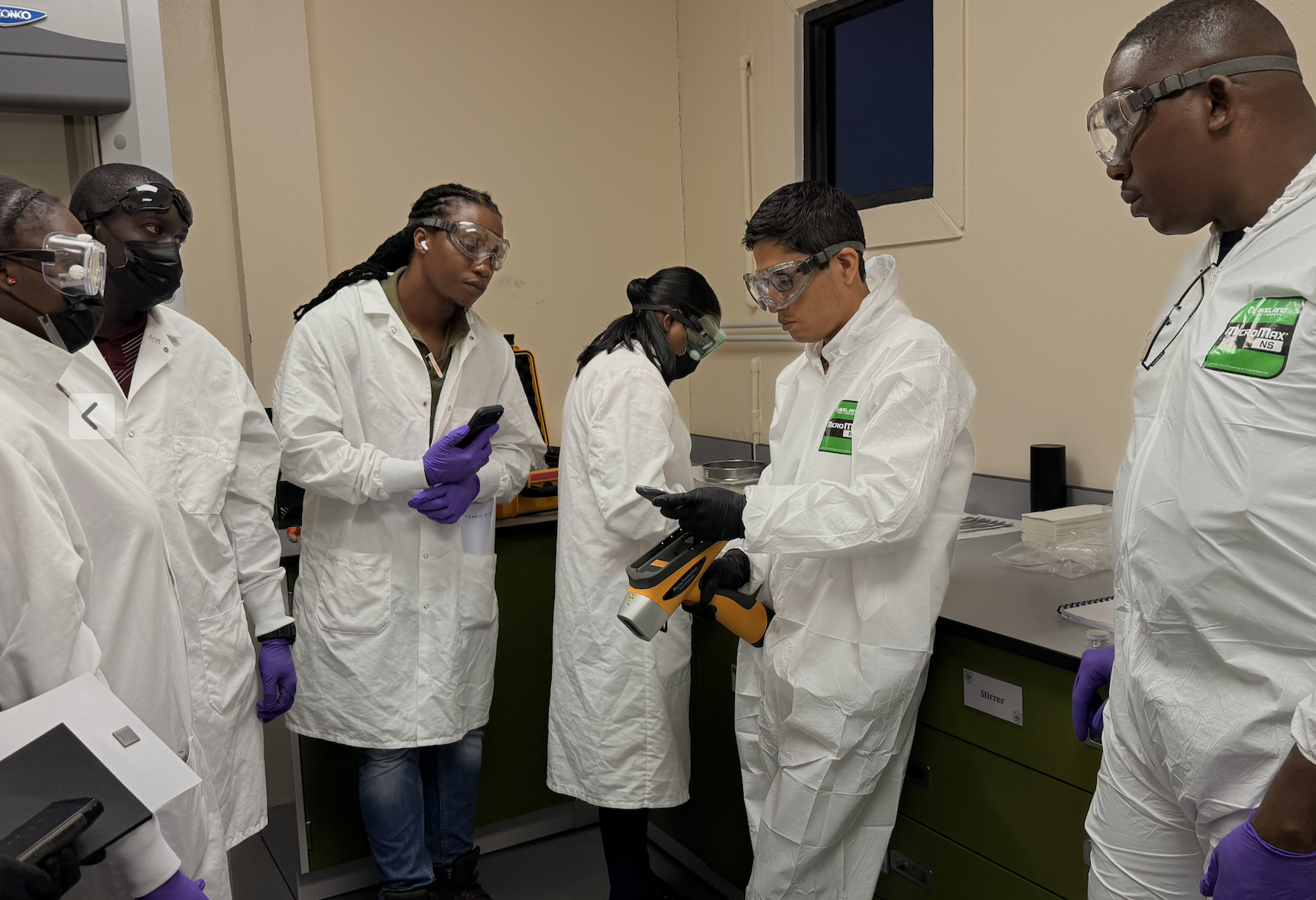
The training then moved from the classroom to practical exercises. Together with customs and other relevant authorities, we tested inspection procedures and the use of portable X-ray fluorescence – XRF – analysers. These instruments provide rapid, non-destructive information on the elemental composition of materials and can therefore be used as an additional screening tool when authorities need to investigate products that may contain elements of concern.
The exercises were also an important test for the guidelines themselves. Participants applied the procedures to practical scenarios, discussed what worked in the field and identified areas where instructions could be made clearer, faster or more useful for officers working under real operational constraints. This feedback is particularly valuable: the purpose of the pilot phase is not simply to train participants, but to verify that the tools developed at regional level can actually work at border and port level. The lessons collected in both countries will now feed into the final revision of the guidelines before they are made available for wider use across the Caribbean.
The level of participation and engagement during both workshops confirmed how important it is to combine regulatory knowledge with hands-on tools. Effective control of hazardous chemical trade depends not only on legislation, but on the ability of the people working at borders to recognise risks, know what to look for and have clear procedures for deciding what to do next.
For Source International, the missions to The Bahamas and Guyana represented the culmination of months of research, consultation, guideline development and training preparation – and an opportunity to see those tools being tested by the people who will ultimately use them. The next step is to incorporate what we learned from the pilot exercises and help turn this experience into a practical model that can support safer trade and stronger protection of human health and the environment across the Caribbean.