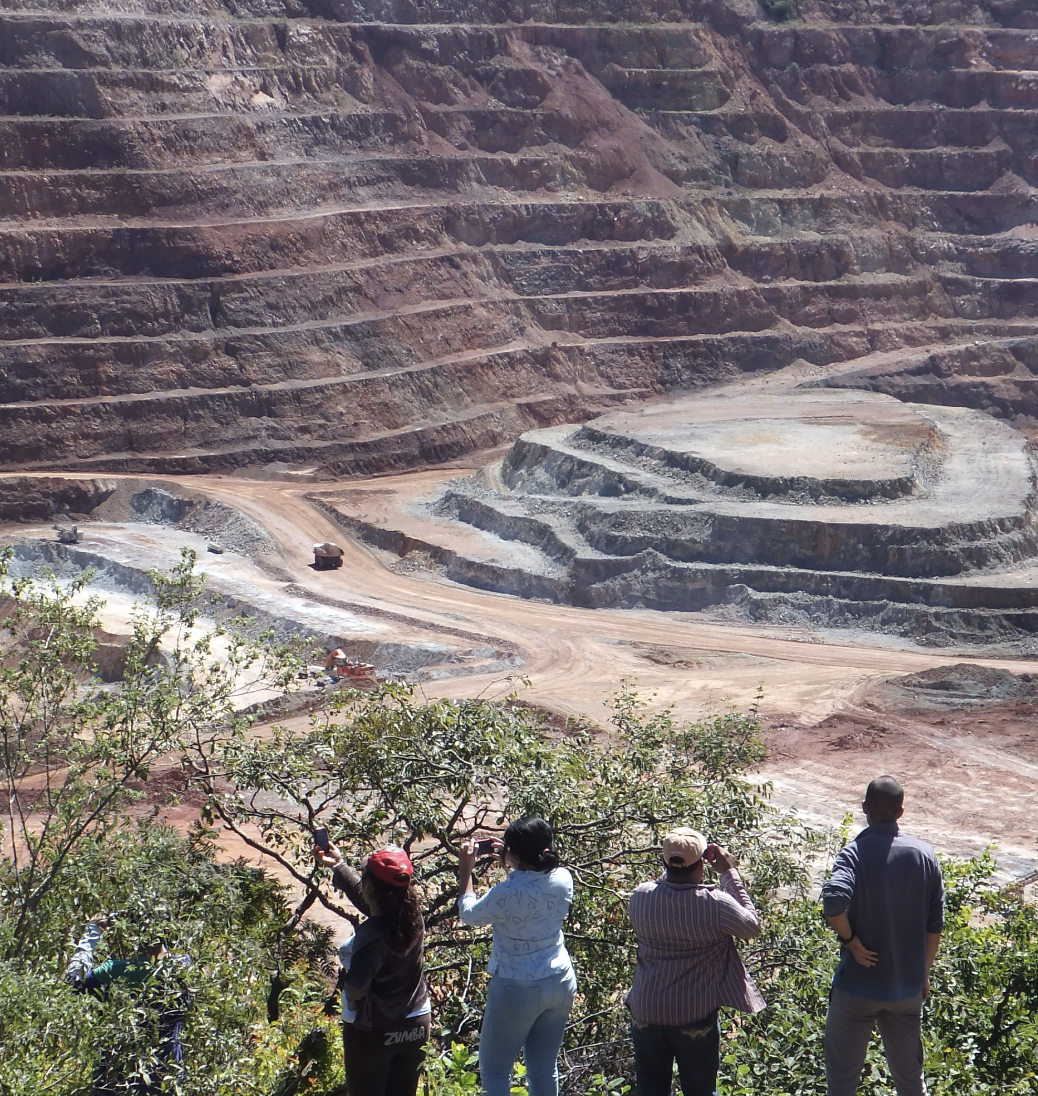
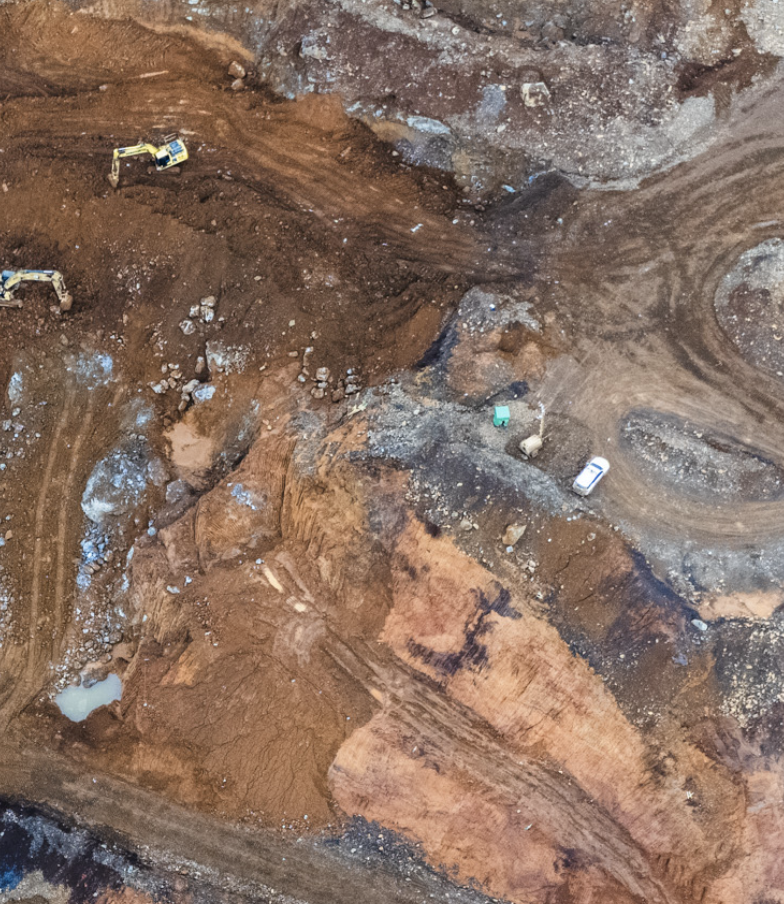
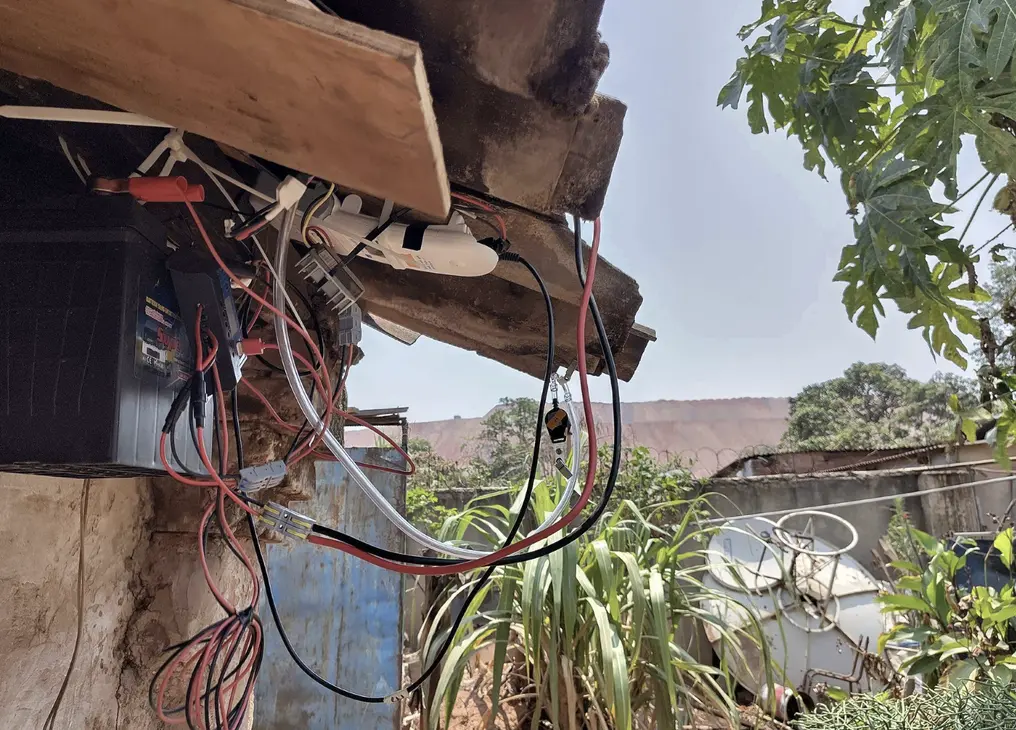
During our latest field campaign in the Democratic Republic of Congo, we installed an AirGradient Open Air monitor in Musonoi, Kolwezi. The device remains in place for a longer period, allowing us to monitor particulate matter pollution continuously, far beyond the typical duration of a field mission.
Air pollution does not stop when our team leaves the field, yet until now we have been collecting environmental data only for relatively short periods of time. Our field campaigns provide essential evidence but inevitably capture only a fraction of the pollution communities are exposed to throughout the year given the logistical, technical, and economic challenges of long-term monitoring. To address this gap, this year we are taking a first step towards extending this short window of observation, with a pilot initiative in the Copper-Cobalt Belt of the Democratic Republic of Congo.
Since 2025, we have been working with RAID, Afrewatch, and the University of Lubumbashi to investigate the environmental and health impacts of large-scale copper and cobalt mining in the Lualaba Province. During our first joint campaign, in October 2025, air-quality monitoring was one of our main areas of investigation, alongside sampling of water and sediments.
The results of this first study, published in June 2026, revealed concerning levels of air pollution in the entire area. At every site monitored, daily concentrations of PM2.5 and PM₁₀ consistently exceeded the World Health Organization air-quality guidelines, in some cases by up to six times. Chemical analysis also revealed elevated concentrations of cobalt, copper, and manganese in inhalable dust compared with levels expected in local soils, pointing to industrial mining residues as an important source of the pollution we measured.
This data was collected for approximately 10 days at the end of the dry season, which we considered long enough to gather a realistic snapshot of the area’s major air quality issues. Yet, as we analyzed the data, new questions emerged: what happens to air quality over the rest of the year with the change of the seasons and climatological conditions?
Leaving a monitor behind
This is why, in August 2026, we went back to the region for a second field campaign. Alongside our standard air quality measurements, we took the opportunity to test a new device designed for long-term community monitoring: an AirGradient Open Air outdoor air-quality monitor. We installed the instrument in the Musonoie neighbourhood, which resulted an highly polluted area in the previous campaign, and left it operating after our return to Italy. Now, on October 12, 2026, the device is still up and running, providing an unprecedented, public and continuous stream of air quality data for the Lualaba province.
This instrument has been designed with communities in mind. After setting up following a few simple instructions, the device continuously measures PM2.5 and a few other parameters, transmitting this data onto an online platform from where it can be visualized, downloaded, and interpreted. Users can also share their real-time measurements on the AirGradient Global Air Quality map, making the data freely accessible to everyone. This means that, even from thousands of kilometers away, we are able continue to observe what is happening to the air in one of the communities at the center of our investigation.
The monitor above reports the concentration of PM2.5 in Musonoi, Kolwezi. The data is updated continuously, so the values shown may differ from those discussed below, which refer to a defined monitoring period (September 2026).
What will be particularly valuable, however, is the time series that the monitor is beginning to build. Continuous observations make it possible to identify recurrent pollution episodes, daily cycles, and longer-term variations that a short field campaign can easily miss. As the dataset grows, we will also be able to investigate how concentrations change with meteorological conditions, different phases of mining activity, and the transition between the dry and rainy seasons.
Importantly, even though these measurements are collected with a low-cost sensor, the AirGradient monitor’s data are completely reliable from a scientific point of view. As a matter of fact, AirGradient thoroughly checks and calibrates every device before it leaves the factory, with particular attention paid to PM2.5, whose readings are thoroughly calibrated against a reference-grade instrument. This additional quality control is reflected in independent testing: the Air Quality Sensor Performance Evaluation Center evaluated the AirGradient monitor and found it to be among the best-performing low-cost sensors for PM2.5 tested by the program.
What the first weeks of data collection is telling us
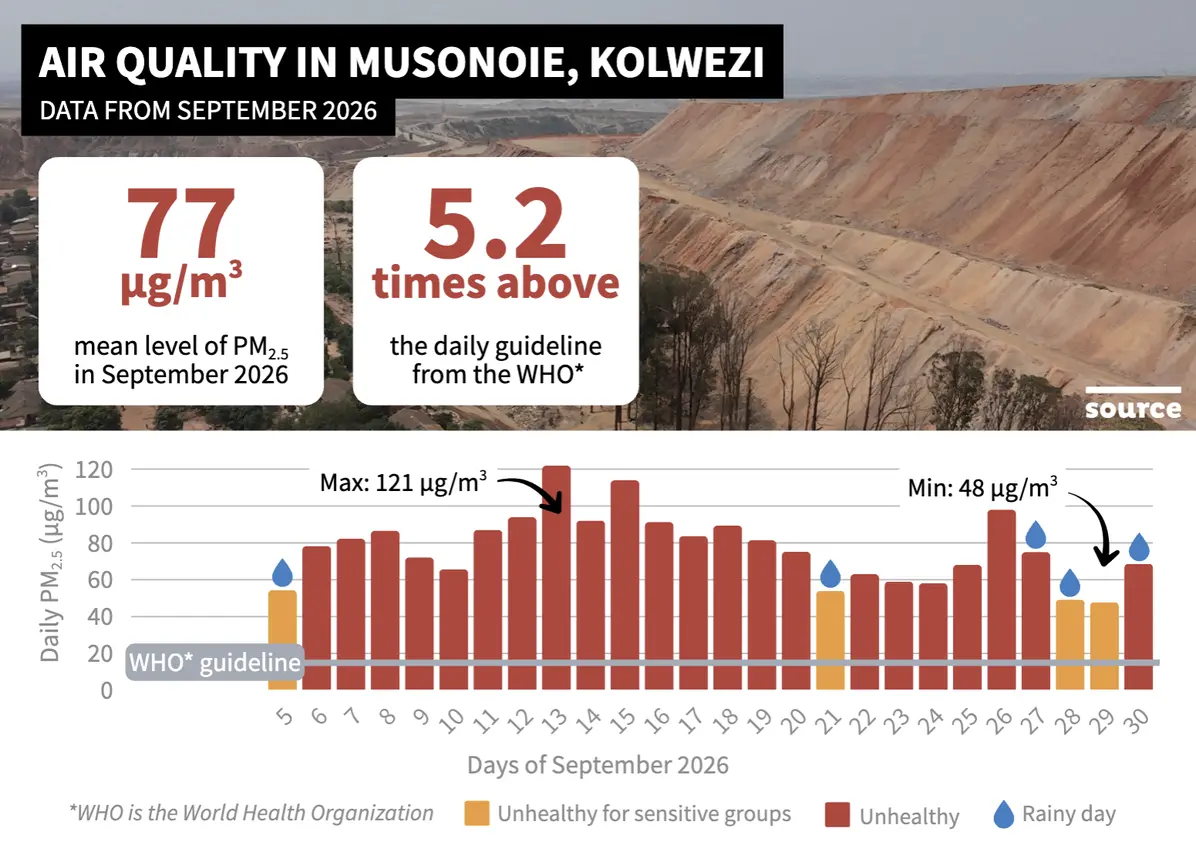
The first month of continuous measurements confirm that high levels of fine particulate matter are not limited to a few days of the year.
Between September 5 and 30, the monitor recorded an average PM2.5 concentration of 77 µg/m3, exceeding by more than 5 times the 24-hour guideline of the World Health Organization (WHO). The highest daily mean reached 121 µg/m³ on September 13, 2026 – 8 times above the WHO guideline.
The WHO recommends that the 24-hour mean concentration of PM2.5 remains below 15 µg/m³, with this level exceeded no more than three to four days per year. In just the first month of monitoring, we already recorded 26 days (of 26!) above the guideline – a strong indication that elevated PM2.5 is not an occasional event but a persistent feature of air quality in the area, confirming our suspicion.
What these numbers ultimately represent is a public -health concern. PM2.5 particles are small enough to penetrate deep into the lungs and enter the bloodstream, meaning that their effects are not limited to the respiratory system. Both short- and long-term exposure are associated with cardiovascular and respiratory disease and premature mortality, including increased risks of ischemic heart disease, stroke, chronic obstructive pulmonary disease and lung cancer. In a community experiencing persistently high concentrations day after day, continuous monitoring is therefore not simply a way of documenting environmental pollution: it is a tool for understanding a potentially significant and sustained health risk.
From collecting data to putting data in communities’ hands
There is one last reason why leaving our AirGradient monitor in Kolwezi matters: environmental monitoring cannot rely solely on the presence of an international research team. People living alongside mines have repeatedly asked for greater transparency and access to environmental information. Our previous work in the region has highlighted a significant gap between the data communities need and the information that is publicly available.
The monitor in Musonoi is therefore not intended to be the end point of the project, but a first step towards something larger. Our goal is to work together with citizens in Kolwezi and surrounding areas to develop a long-term, community-based air-quality monitoring network: a series of monitors that can be maintained locally, combined with training on how to interpret the measurements and with tools to turn the resulting evidence into information that communities can actually use. But the challenge goes beyond the mining sector. The lack of national ambient air-quality standards and the very limited air-quality monitoring infrastructure are major obstacles to effective air-pollution management in the Democratic Republic of Congo.
For this reason, we also intend to connect our work in Kolwezi with broader initiatives that aim to advocate for the introduction of national air quality standards in the country. Monitoring pollution is essential, but measuring it is only the first step: data needs to be public, understandable, and ultimately capable of supporting better policies and stronger protections for the people exposed.